



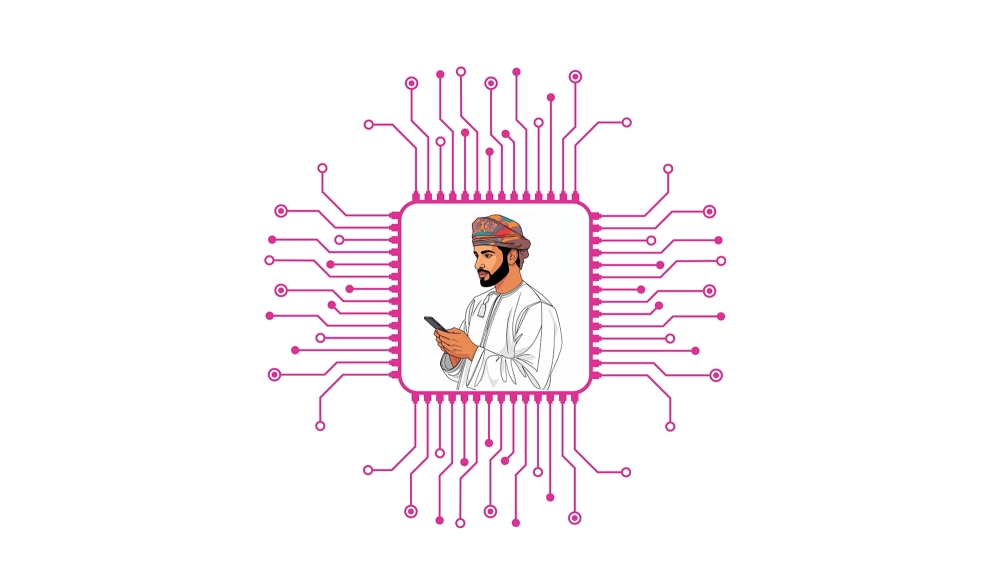





In an era of rapid technological acceleration, artificial intelligence is no longer merely a tool; it is a force reshaping language, knowledge, and even the way individuals perceive identity.
Amid this transformation, a fundamental question arises: can national identity endure, or is it being irrevocably redefined?
In the Omani context, this shift is viewed less as a threat and more as an opportunity — an invitation to rethink the relationship between people and their heritage. Identity is no longer something static to be preserved; it is a living experience that can be reimagined and enriched through modern tools without losing its core essence.
Today, artificial intelligence can generate text, analyse language, and recreate visual and narrative forms. This places the Arabic language and cultural heritage at a critical crossroads: either they actively shape this transformation or risk being subsumed into systems that fail to reflect their uniqueness.
This underscores the importance of guiding technology to serve identity rather than replace it. The real challenge lies not in the existence of AI, but in its application: will it flatten cultural nuance, or deepen understanding and revive details that might otherwise fade with time?
Cultural initiatives are emerging as tangible responses to this challenge. Among them is the 21st Cultural Season at the University of Nizwa, held under the theme ‘National Identity in the Age of Artificial Intelligence.’ More than a series of events, it serves as a dynamic platform for dialogue, experimentation and engagement.
Maryam al Kimiani of the University’s Media and Marketing Department explains this vision: “The launch of the 21st Cultural Season reflects a conscious effort to balance rapid technological advancement with the preservation of Omani cultural identity. Artificial intelligence is not merely a technical tool, but a driving force for strengthening identity through digitising heritage and enhancing the presence of the Arabic language in the digital space.”
She further highlights that the initiative reflects a broader institutional commitment to integrating technology with cultural preservation, encouraging innovative approaches that present heritage in ways aligned with contemporary realities.
This responsibility extends beyond institutions to young people, who stand at the heart of this transformation. Their engagement forms a vital bridge between past and future, as they harness modern technologies to address questions of identity.
Al Kimiani emphasises the pivotal role of youth:
“Omani youth represent the bridge between the past and the horizons of the future. By harnessing modern technologies, they are transforming heritage into interactive models that engage society, proving that remaining rooted in identity is the true driver of innovation under Oman Vision 2040.”
The Cultural Season has also fostered an interactive ecosystem that brings together thought leaders and technologists, connecting AI experts with heritage specialists. This convergence ensures that technology evolves to preserve and enrich identity in an increasingly digital world.
Equally important is its role in empowering students — showcasing innovative projects and encouraging the use of programming and digital tools to develop solutions that serve society, while advancing efforts to digitise cultural heritage for future generations.
In her concluding remarks, Al Kimiani underscores that the initiative represents a practical step towards shaping Oman’s digital future — one that fosters collaboration, strengthens research and promotes the responsible use of AI in the service of societal values.
Ultimately, the question is not whether identity will be influenced by artificial intelligence, but how people choose to use these tools to remain present within the narrative. Technology, however advanced, holds little meaning unless guided by a conscious vision rooted in human values and cultural depth.
Oman Observer is now on the WhatsApp channel. Click here


